The Parent Journey
Parenting is a journey that is both immensely rewarding and deeply challenging. As we navigate the joys and complexities of raising children, many of us unknowingly carry the weight of unresolved trauma passed down through generations. This phenomenon, known as generational trauma, often shapes the ways we interact with our children, impacting how we respond to stress, conflict, and emotional intimacy. By addressing this inherited pain with intention, parents can disrupt harmful cycles and create a healthier future for their families and the wider community.
What is Generational Trauma?
Generational trauma, also called intergenerational or transgenerational trauma, is the emotional pain and psychological scars that are passed down from one generation to the next. It transcends individual experience, embedding itself into the fabric of families and communities. The trauma of colonialism, war, systemic racism, displacement, or even personal events like abuse and neglect can be imprinted on future generations, often without conscious awareness.
Dr. Joy DeGruy, a prominent psychologist and author of Post Traumatic Slave Syndrome, has explored how the historical trauma of slavery, colonization, and systemic oppression in the African American community continues to affect descendants. DeGruy asserts that the unresolved trauma of ancestors can manifest as patterns of violence, addiction, or emotional detachment, creating cycles of dysfunction. This concept applies to many cultures globally, where the historical wounds of oppression or cultural disruption continue to reverberate through families today.
Similarly, Dr. Judith Herman, a leading expert on trauma and author of Trauma and Recovery, describes how trauma, particularly when it is sustained and unresolved, can ripple through generations. “The symptoms of trauma,” she explains, “are contagious.” Whether through learned behaviours, emotional withdrawal, or the silencing of difficult family histories, trauma becomes ingrained in the emotional DNA of families, shaping not just individuals but entire communities.
Cultural Dimensions of Generational Trauma
While generational trauma exists universally, its manifestations are deeply influenced by cultural and historical contexts. Many global majority communities, including Indigenous peoples, African diasporic cultures, and refugees, carry the scars of cultural trauma caused by colonization, genocide, enslavement, and forced migration. These collective wounds often pass down as feelings of shame, identity confusion, or internalized oppression.
For instance, the impact of colonization on Indigenous communities worldwide is an example of how cultural disruption fuels generational trauma. The removal of children from their families, forced assimilation policies, and loss of land have led to widespread emotional and psychological scars. The trauma becomes a lived reality for descendants, influencing how they parent and view the world. In many African, Asian, and Latin American contexts, historical trauma has similarly resulted from the legacies of imperialism, economic exploitation, and cultural erasure. This shared pain binds communities but can also perpetuate cycles of struggle when left unaddressed.
Dr. Eduardo Duran, a psychologist known for his work with Indigenous populations, describes generational trauma as a “soul wound,” a deep psychological and spiritual injury that must be healed collectively. “We cannot heal alone,” he emphasizes. “When one person heals, they help heal the community.” This concept of collective healing is especially relevant in cultures that emphasize communal well-being over individualism. For many global majority families, addressing trauma is not just a personal task—it is a community responsibility.
How Trauma Passes Down
Trauma is not passed down solely through genetics or biology; it is transmitted through behaviours, emotional responses, and even silence. For example, a parent who grew up in a home where emotions were repressed may unconsciously pass on emotional avoidance to their children, even if they desperately want to connect. This can result in children feeling emotionally neglected, despite the parent’s best intentions.
Dr. John Bowlby, the founder of attachment theory, explored how early relationships with caregivers shape a child’s future emotional landscape. Bowlby discovered that children who did not experience secure attachment—because their parents were emotionally unavailable or inconsistent—were more likely to struggle with relationships and self-regulation later in life. This pattern can easily become cyclical, as those children grow up to be parents themselves.
Cultural trauma also influences how parents teach their children to navigate the world. For example, African American parents may teach their children hypervigilance and emotional restraint to protect them from the dangers of systemic racism. Similarly, survivors of war or political violence may in still their children with a sense of constant fear or mistrust as a means of survival. While these behaviours are rooted in the trauma of the past, they can often limit children’s capacity for emotional openness and growth.
The Good Enough Mother:
Moving Beyond Perfection
In the midst of these challenges, it is crucial to remember that perfection is not the goal in parenting. Donald Winnicott, a renowned British psychoanalyst, introduced the concept of the “good enough mother” (or parent) to challenge the unrealistic expectation that parents must always meet their children’s needs flawlessly. Winnicott argued that children thrive when they experience small, manageable amounts of frustration—moments when their parents are not completely attuned. This allows children to develop resilience, self-soothing abilities, and a realistic understanding of relationships.
In many global cultures, there is a collective understanding that “it takes a village to raise a child.” This belief extends the responsibility of child-rearing beyond the individual parent and reinforces the idea that children benefit from multiple caregivers, each contributing something unique to the child’s development. It is this collective caregiving that embodies Winnicott’s idea of “good enough.” Parenting becomes less about individual perfection and more about creating a supportive environment that fosters the child’s emotional, social, and cultural growth.
Breaking the Cycle:
The Power of Conscious Parenting
Healing generational trauma requires intentional effort, but the impact of this work can be transformative. When parents commit to understanding their own wounds, they not only heal themselves but also change the trajectory for their children and future generations.
Dr . Bessel van der Kolk, a world-renowned trauma expert and author of The Body Keeps the Score, highlights that “being able to feel safe with other people is probably the single most important aspect of mental health.” For parents, this means creating emotionally safe spaces where their children can express their feelings without fear of judgment or rejection. By doing this, parents model a new way of relating that breaks the patterns of emotional avoidance or hypervigilance they may have inherited.
One person’s commitment to healing has a ripple effect. By consciously choosing to break harmful patterns—whether that means learning new communication skills, setting boundaries, or seeking therapy—parents can reshape the emotional landscape of their family. This is not just a personal victory; it has a trickle-down effect, impacting future generations and contributing to a broader culture of healing.
Unboxed Imagination:
Facilitating Collective Healing
At Unboxed Imagination, we are deeply committed to supporting parents and families as they embark on this healing journey. Our work is rooted in the belief that healing generational trauma requires creativity, community, and intentionality.
Our Approach:
- Therapeutic Arts and Coaching : We use art, storytelling, and coaching as therapeutic tools to help parents explore everyday challenges and express emotions in safe, non-judgemental ways. This approach is particularly effective in addressing historic difficulties, as it allows parents to communicate on a deeper level.
- Cultural Sensitivity: We understand that healing looks different in every culture. Our therapeutic process honours diverse traditions, stories, and histories, providing a space where parents can reconnect with their cultural strengths while processing emotions bought on by reoccurring challenges.
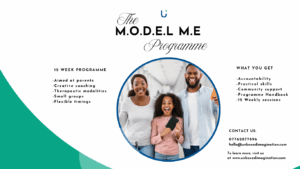
- Parent Coaching and Workshops: Our parent coaching and educational workshops equip parents with practical tools for mindful parenting, emotional regulation, and conscious communication, helping them break cycles of trauma.
- Healing Through Community: We emphasize the power of collective healing, providing therapeutic group sessions and community workshops where parents can share their experiences, learn from others, and build a supportive network.
Healing for Future Generations
Healing generational trauma is a powerful act of love that echoes through time. It requires intention, vulnerability, and courage, but the results can be transformative. By addressing their own wounds, parents create new pathways of connection, safety, and emotional freedom for themselves and their children. At Unboxed Imagination, we believe that healing is a collective endeavour—one that has the potential to change not only individual families but entire communities.
As Carl Jung once said, “Until you make the unconscious conscious, it will direct your life and you will call it fate.” The power to heal lies within our awareness, our choice to face the past, and our ability to imagine a brighter future for our children and future generations. We at Unboxed Imagination are honoured to support parents on this journey, fostering a legacy of love, resilience, and hope for all.
Are you ready to get started on your journey? Book a discovery call to hear about how we can work together.